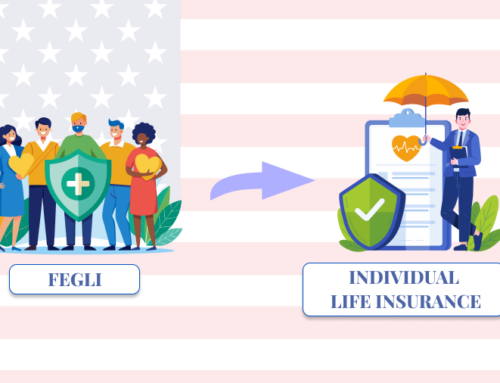
For many federal employees, FEGLI feels like a “set it and forget it” benefit. You enroll when you’re hired, premiums come out automatically, and life insurance feels checked off the list. But for families living in Puerto Rico—where household structures, caregiving responsibilities, and retirement timelines often differ from the mainland—this assumption can quietly create risk.
The real question isn’t whether FEGLI exists. The question is whether it would actually protect your family’s financial stability if something happened to you tomorrow. This guide walks you through how FEGLI works, where it helps, where it falls short, and how to evaluate whether it truly aligns with your family’s long-term needs.
What Is FEGLI and How Does Federal Employee Life Insurance Work?
FEGLI, or the Federal Employees’ Group Life Insurance program, is a group life insurance plan available to eligible federal employees. It’s designed to provide basic protection with minimal enrollment friction, which is why most people end up enrolled without much analysis.
Because FEGLI is group-based, coverage amounts and pricing are standardized rather than personalized. This simplicity is helpful early in a career, but it can become limiting as family responsibilities, income levels, and long-term goals evolve.
What Are the Different FEGLI Coverage Options and What Do They Include?
Understanding FEGLI requires breaking it down into its four core components, each serving a different purpose.
Basic FEGLI Coverage Explained
Basic FEGLI coverage is calculated using your annual salary rounded up to the nearest thousand, plus an additional fixed amount. While this may sound substantial, it often replaces only a few years of income, which may not be enough for families depending on that income long-term.
Option A, Option B, and Option C Explained Simply
Option A provides a flat additional amount, while Option B allows you to multiply your salary for extra coverage. Option C extends coverage to eligible family members. These options add flexibility, but they also increase cost and complexity, especially as premiums rise with age.
How Much Life Insurance Does FEGLI Actually Provide in Real Life?
On paper, FEGLI coverage can look sufficient. In practice, many families find it falls short when real expenses are considered.
Why Salary-Based Coverage Often Leaves Gaps
FEGLI ties coverage primarily to income, not to obligations. Mortgages, outstanding debts, education costs, and long-term caregiving needs are not factored into the formula, which means families may receive less support than they actually need.
According to LIMRA, over 40% of U.S. In the event that the principal wage earner died, households would experience financial difficulties within six months.
Why FEGLI Gets More Expensive As You Get Older
One of the most overlooked aspects of FEGLI is how dramatically its cost structure changes over time.
FEGLI Premium Increases After Age 50
FEGLI premiums increase in five-year age bands starting at age 50. These increases are automatic and can become significant just as many federal employees are preparing for retirement and managing tighter cash flow.
The “Silent Cost” Problem
Because premiums are deducted automatically, many people don’t realize how much they are paying until they compare it with alternatives. This often leads to overpaying for coverage that no longer matches their actual needs.
Is FEGLI Enough for Different Types of Federal Employees?
FEGLI’s adequacy depends heavily on individual circumstances.
Single Federal Employees
For individuals without dependents, FEGLI may be sufficient for covering final expenses and short-term obligations. However, even single employees often underestimate future responsibilities that may arise later in life.
Married Federal Employees With Dependents
For families, FEGLI rarely replaces enough income to maintain stability. Housing, childcare, education, and healthcare costs often extend well beyond the coverage FEGLI provides.
Federal Employees Approaching Retirement
As retirement nears, FEGLI coverage can shrink or become prohibitively expensive. This is also the stage when survivor income planning becomes most critical.
FEGLI vs Private Life Insurance: What’s the Real Difference?
Comparing FEGLI with private coverage reveals important trade-offs.
Cost Predictability and Control
Private policies often offer level premiums that remain stable, while FEGLI premiums increase with age. This difference becomes especially noticeable later in life.
Flexibility and Ownership
Private life insurance policies allow customization around coverage duration, beneficiaries, and goals. FEGLI remains a standardized federal life insurance policy with limited adaptability.
According to Policygenius, term life insurance purchased privately can cost significantly less over time than group insurance for healthy individuals.
How to Determine If FEGLI Is Enough Life Insurance for Your Family
Evaluating FEGLI starts with asking the right questions.
A Simple Coverage Evaluation Framework
Consider how long your family would need financial support, not just how much coverage exists. Income replacement, debt payoff, and future expenses should all be part of the calculation.
Key Questions to Ask Yourself
Who depends on my income today? How would expenses change if I were gone? What financial responsibilities would continue for years, not months? These questions reveal whether FEGLI truly aligns with your situation.
Should You Supplement FEGLI or Replace It Entirely?
FEGLI doesn’t have to be an all-or-nothing decision.
When Supplementing FEGLI Makes Sense
Some federal employees use FEGLI as a base layer and add private coverage for income replacement or specific goals. This approach balances simplicity with flexibility.
When Replacing FEGLI Is the Smarter Option
For others, replacing FEGLI entirely reduces long-term costs and provides predictable protection. The right decision depends on age, health, family structure, and financial priorities.
Frequently Asked Questions About FEGLI Coverage
Can FEGLI Be Kept After Retirement?
Yes, but coverage may reduce over time and costs can increase, making ongoing evaluation important.
Is FEGLI Taxable?
In most cases, FEGLI death benefits are not subject to income tax, but employer-paid premiums above certain limits may have tax implications.
Can FEGLI Be Cancelled?
FEGLI can generally be reduced or cancelled, but decisions should be made carefully to avoid unintended gaps.
Wrapping Up
FEGLI provides a valuable starting point, but it was never designed to be a comprehensive life insurance strategy. For federal employees and retirees living in Puerto Rico, the real risk lies in assuming “automatic” coverage equals adequate protection.
Taking the time to evaluate FEGLI in the context of your family’s real needs brings clarity and confidence. Educational resources like PWR Retirement Group exist to support that process, especially when guided by the best federal retirement consultant in puerto rico who understands both federal benefits and local realities.
When life insurance decisions are intentional—not automatic—families gain peace of mind that lasts far beyond paperwork.