


Trusts & Keogh Plans

Two planning tools for federal employees, retirees and their families in Puerto Rico and across the U.S. A trust organizes how your assets reach your family. A Keogh plan builds retirement savings from self-employment income.

Get in Touch With Us

"*" indicates required fields

Veteran*

Get in Touch With Us

"*" indicates required fields

Veteran*

Why This Matters

Two tools. One plan for your family’s future.

Your TSP and FERS/CSRS benefits follow their own rules. A trust and a Keogh plan can work alongside them: one helps organize how assets are managed and passed on, the other can add retirement savings if you also earn income from a business.

PWR provides education and initial guidance. A licensed attorney and tax professional handle the legal and tax structure.

Trusts

Organize your assets and how they reach your family.

Keogh Plans

Retirement savings for those who also work for themselves.

Not sure which one applies to you?

A short educational session can help you see where a trust, a Keogh plan, or both may fit with your federal benefits.

Trusts (Fideicomisos)

A trust is a legal arrangement that sets out who manages certain assets and who receives their benefits. The grantor creates it and contributes assets, the trustee manages them according to the document, and the beneficiaries receive the income or assets. How it works depends on the document, the governing law, and the assets actually transferred into it.

  • Can make it easier to manage assets during an incapacity

  • Lets you set instructions for minors or family members who need help with an inheritance

  • In states where it applies, may avoid probate for properly transferred assets

  • Lets you name who manages trust assets if illness or incapacity prevents you

  • Works alongside beneficiary designations for insurance, accounts and federal benefits

  • Does not by itself create extra income, guaranteed returns or a new pension

At a Glance

3

Key roles

2

Main types

219-2012

PR Trust Act

Separate

TSP / IRA review

Not sure a trust fits?

Compare a trust, a will and beneficiary designations before choosing.

FLEXIBLE
Revocable trust

Can be changed according to its terms. Commonly used for asset management and succession.

WITH LIMITS
Irrevocable trust

Limits changes and access to the assets. Certain structures may protect beneficiaries’ interests, depending on who contributed the assets and the jurisdiction. It is not absolute protection.

KEY STEP
Signing is not enough

Assets must be legally transferred into the trust. Retirement accounts and their beneficiary designations need a separate review and do not move to the trust automatically.

Trusts in common situations

If the creator is sued

A revocable trust generally does not stop creditors from reaching its assets. Transfers made to hinder creditors can be challenged.

If an heir is sued

A spendthrift clause may limit access to the heir’s interest, with exceptions such as support obligations.

In a divorce

Placing marital assets in a trust does not erase a spouse’s rights. Mixing an inheritance with marital funds can complicate keeping it separate.

Staged inheritance

Illustrative: $300,000 for a child could be paid as $100,000 at ages 25, 30 and 35, while the trustee manages the balance.

At a Glance

2

Plan designs

4

Setup steps

$15K

PR exclusion, 60+

$11K

PR exclusion, under 60

Do you have a side business?

Eligibility starts with self-employment income, not your federal salary or pension.

PR exclusion applies to certain eligible periodic pensions. Per Hacienda 2025 instructions, Schedule H.

Keogh Plans

A Keogh is a qualified retirement plan tied to a business or self-employment activity. Money is contributed and invested under the plan’s rules. It can be set up as a defined contribution or a defined benefit plan; for defined benefit, an actuary calculates the required funding.

  • Can add a fund to supplement your federal pension and other retirement income

  • Deductible contributions and tax deferral; taxes may apply on distribution

  • Works alongside your TSP and FERS/CSRS planning; it does not replace them

  • Setup: verify income and tax jurisdiction, design the plan, contribute, maintain filings

  • In Puerto Rico, IRS qualification does not automatically mean Hacienda qualification

  • Does not by itself guarantee returns or lifetime payments

Does a Keogh apply to a federal employee?

NOT ON ITS OWN
Federal salary only

A federal salary alone does not allow you to set up your own Keogh.

MAY QUALIFY
Salary + side business

Eligible income from the business may allow it.

MAY QUALIFY
Retiree + independent work

Income from that work is evaluated. A pension alone does not create eligibility.

EXAMPLE
VA employee who consults

The Keogh analysis starts from her consulting income, not her VA salary.

Illustrative Keogh examples

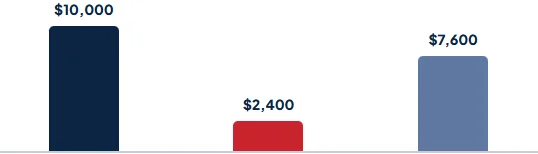
A tax deduction today

$10,000 deductible contribution at an assumed 24% marginal rate.

$10,000 × 24% = $2,400. Assumes full deduction allowed; excludes costs and other taxes. Distributions may be taxed later.

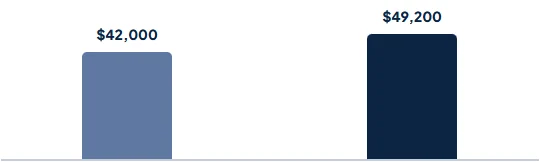
Added income in retirement

$24,000 pension + $18,000 Social Security, plus $600/month from a $120,000 Keogh fund.

No returns, taxes or costs. $120,000 ÷ $600 = 200 months (16 yrs, 8 mos), then the fund is depleted. Not a quote, an SSA determination or a lifetime annuity.

Puerto Rico

What Puerto Rico residents should know

Trusts and inheritance

Local law (Act 219-2012) sets formalities for creating a trust and transferring assets into it.

A family trust must respect forced heirs’ rights and the limits of the legítima.

Creating a trust does not create the $15,000 exclusion, and the trust may have its own tax obligations.

Keogh plans and the $15,000 exclusion

Certain eligible periodic pensions may exclude up to $15,000 a year at age 60+, or up to $11,000 under 60.

A qualified Keogh with eligible periodic payments could apply. Opening the account does not grant it automatically.

A lump-sum withdrawal, an IRA or a private annuity is not presumed eligible. Each state has its own rules.

Act 219-2012, as amended in 2026; Hacienda 2025 instructions, Schedule H. An attorney and tax professional should confirm how these apply to each family.

Working Together

How trusts, Keogh plans and federal benefits connect

01

Beneficiary designations

A Keogh pays benefits according to the plan document and beneficiary designation, subject to spousal rights. A trust’s instructions do not override them on their own.

02

Different trust rules in PR

Act 219 separates qualified retirement plan trusts from family trusts. For plans, Article 71 excludes assets from civil inheritance provisions and Article 70 protects the spouse’s rights.

03

TSP and FERS/CSRS keep their rules

A trust can be a TSP beneficiary under its rules, but survivor benefits and divorce orders for FERS/CSRS and the TSP follow their own requirements.

Clear Up the Confusion

6 Common Misconceptions

01

“Signing the trust moves everything”

Assets must be legally transferred. Retirement accounts are reviewed separately.

02

“Irrevocable means fully protected”

Protection depends on who funded it, the access you keep and the jurisdiction.

03

“A trust creates the $15,000 exclusion”

The exclusion depends on an eligible pension, your age and the form of payment.

04

“My federal salary qualifies me for a Keogh”

Eligibility comes from self-employment or business income, not federal wages or a pension.

05

“Keogh withdrawals are tax-free”

Contributions may be deductible, but distributions may be taxed later.

06

“A Keogh can’t be touched in a divorce”

In an ERISA plan, a valid QDRO can assign part of the benefits to a former spouse.

Want to talk?

Call us to talk through how a trust or Keogh plan fits with your federal benefits.

Common Questions

Frequently Asked Questions

A trust is a legal arrangement for managing and passing on assets. A Keogh is a qualified retirement plan funded from self-employment income. They serve different purposes and can work together.

A trust can be a TSP beneficiary under the plan’s rules. FERS/CSRS survivor benefits keep their own rules.

No. A Keogh is based on eligible self-employment or business income.

A trust does not. A qualified Keogh with eligible periodic payments could apply, but opening the account does not grant it automatically.

It depends on the structure and the law. A revocable trust generally does not; ERISA plans generally have protections with exceptions. Neither guarantees immunity.

PWR provides education and initial guidance. A licensed attorney drafts the trust or plan documents, and a tax professional reviews the tax treatment.

Take the First Step

Plan with clarity. Protect what matters.

Schedule a free educational session with PWR Retirement Group to understand how a trust, a Keogh plan, or both may fit your family and your federal benefits.